
David Barry, Jailer at Cellular Jail
What official records and prisoner accounts establish
Who Was David Barry?
David Barry was a colonial prison official associated with Cellular Jail in the early twentieth century. The Ministry of Culture's account of the jail describes him as a head overseer and jailer and records his period as jailer as 1905 to 1919.
That date range is important. The British penal settlement in the Andaman Islands began in 1858, decades before Barry's documented period at Cellular Jail. Accounts that place him in charge of the first group transported in 1858 combine two different periods and should not be treated as reliable without archival evidence.
The Prison He Helped Administer
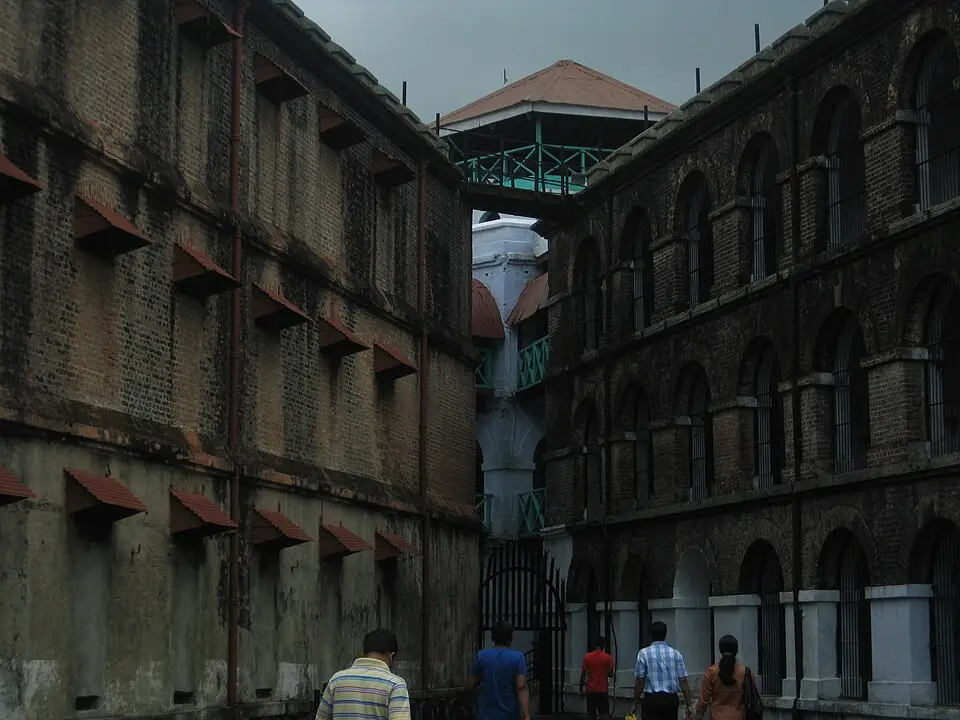
Cellular Jail was built to enforce separation, surveillance and individual confinement. Construction began in 1896 and the main building was completed in 1905–06. Its seven wings radiated from a central tower, and the cells were arranged to restrict communication between prisoners.
The first major group of political prisoners sent to the completed jail arrived in December 1909 after convictions in the Alipore Bomb Case. Government records say they were to be treated as especially dangerous, kept apart and assigned hard labour rather than clerical work.
Prison labour included oil grinding, coir pounding, rope making, coconut husking, weaving, gardening, hill cutting and cleaning drains and swamps. Solitary confinement, restraints, poor food, flogging and difficult work quotas formed part of the wider prison system described in government records and prisoner memoirs. Barry worked within this system during the period recorded by the Ministry of Culture.
What the Records Say About His Conduct
The Ministry of Culture account describes Barry's treatment of prisoners as cruel. It says Barindra Kumar Ghosh and Vinayak Damodar Savarkar recorded his authoritarian addresses in their accounts of imprisonment.
The same government account records that prisoner Nand Gopal complained about Barry's behaviour when Reginald Henry Craddock, a member of the Viceroy's Executive Council, visited in 1913. It also states that conversation between prisoners was forbidden under rules associated with Barry.
A peer-reviewed article published in The Indian Journal of Political Science examines Barry's place in prisoner accounts and the wider resistance to Cellular Jail's administration. These sources support describing him as a significant figure in the prisoners' experience of the jail. They do not justify treating every dramatic quotation or story circulating online as established fact.
Prisoner Testimony and Historical Evidence
Much of what is known about daily life inside Cellular Jail comes from the memoirs of people who were imprisoned there. The Ministry of Culture lists works by Barindra Kumar Ghosh, Upendranath Bandopadhyay, Sachindra Nath Sanyal, Vinayak Damodar Savarkar and other former prisoners among the records of conditions inside the jail.
Memoirs are essential evidence because they record the experience of people subjected to the prison system. They are also personal accounts written from particular viewpoints and at particular times. A careful history should identify the author and source of a quotation, then compare it with administrative files and historical research where possible.
The Prime Ministers Museum and Library research paper linked below provides broader archival context for Cellular Jail's administration, prisoners' protests and official responses. It is useful for understanding the system in which Barry served, although it is not a biography of Barry.
What Is Not Established Here
The sources used for this page do not establish Barry's full legal name, date or place of birth, nationality, career before or after Cellular Jail, or date and place of death. They also do not support the claim that he supervised the first prisoners transported to the Andamans in 1858.
Those details have therefore been left out. This is a record of what can presently be supported, not a complete biography. If stronger archival evidence becomes available, the page should be revised with a direct citation and a new verification date.
Why David Barry Matters to the History of Cellular Jail
Barry's importance comes from his documented role in the administration of Cellular Jail and from the frequency with which former prisoners referred to him when describing prison discipline. His story belongs within the larger history of a colonial institution designed around exile, isolation and forced labour.
For the full sequence from the 1858 penal settlement to the National Memorial, read the sourced history of Cellular Jail and Kala Pani.
CellularJail.com is not an official government website. This page separates sourced findings from details that could not be verified.